
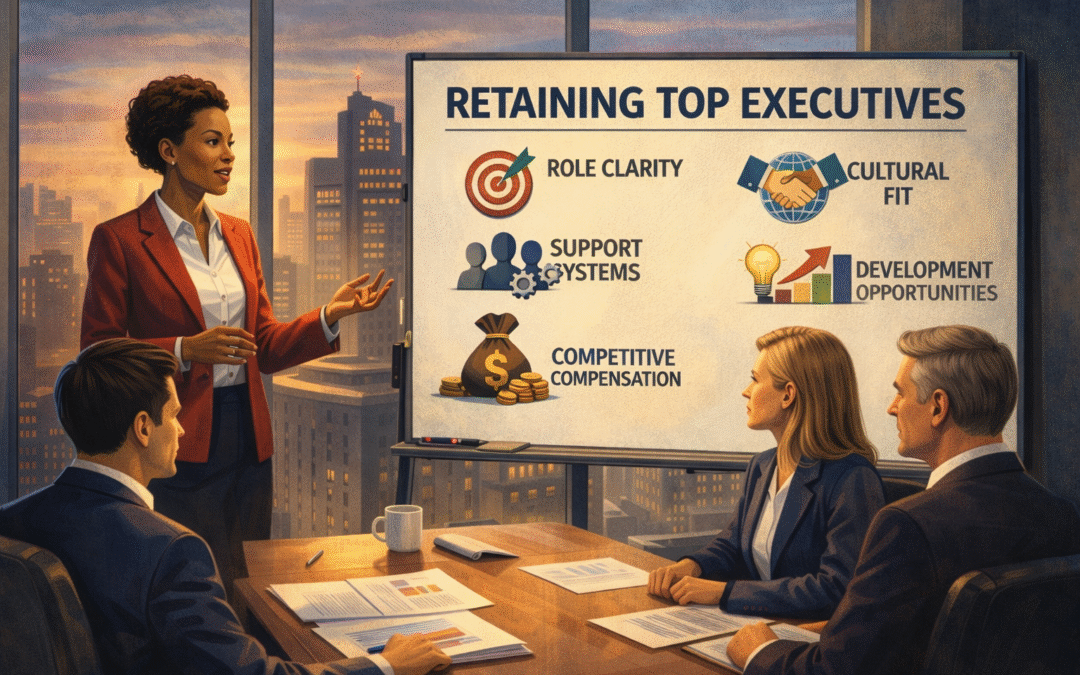
A global retailer once confided in us: they had successfully recruited a high‑profile Chief Digital Officer, but within 18 months, she was gone—lured away by a competitor. The exit wasn’t about money. It was about culture, support, and clarity of role. Losing senior talent is costly—not just in search fees, but in lost momentum, shaken investor confidence, and the time it takes to rebuild trust. The question isn’t just how to attract executives—it’s how to keep them once they’re in the seat.
Why Retention Matters at the Executive Level
Executives hold the keys to strategy, culture, and investor confidence. When they leave prematurely, it creates ripple effects across the business. High turnover at the top can unsettle employees, unsettle the market, and signal instability. Retaining top executive talent isn’t about comfort—it’s about continuity.
A Client Story
One financial services client had a revolving door at the CFO level. Each hire stayed less than two years, and the pattern was costing credibility with investors. When we assessed the situation, the issue wasn’t pay—it was role clarity. CFOs weren’t sure if they were expected to be strategic partners or tactical controllers. We worked with the board to reset expectations, improve onboarding, and build better communication channels. The next CFO stayed—and is still there today—because the role was clearly defined and supported.
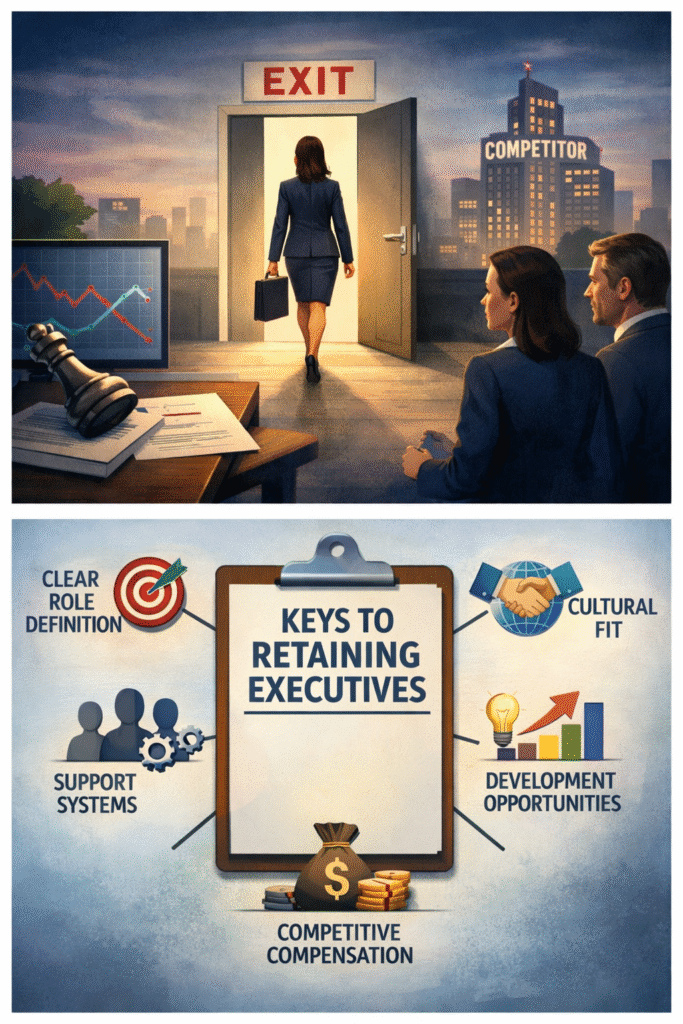
The Keys to Retaining Executives
• Clear Role Definition: Executives need to know what success looks like—strategic partner, operator, or change agent.
• Cultural Fit: Leaders stay longer when their personal values align with the company’s mission and culture.
• Support Systems: Access to resources, decision‑making authority, and a strong team are essential.
• Development Opportunities: Even senior leaders want to grow. Provide opportunities for new challenges, board exposure, and continued learning.
• Competitive Compensation: While not the only factor, fair and motivating packages signal respect.
Common Pitfalls That Drive Executives Away
• Misaligned Expectations: Promising strategic influence but delivering operational firefighting.
• Lack of Inclusion: Executives hired for diversity who aren’t fully integrated often feel isolated.
• Poor Onboarding: Even senior leaders need structure and support in the first 90 days.
• Board Disconnect: Tension between executives and boards can erode trust quickly.
Building a Retention Strategy
Retention starts during hiring. Set realistic expectations, provide transparency, and ensure cultural alignment. Once the executive is in seat, establish regular check‑ins—not just performance reviews, but real conversations about goals, challenges, and aspirations. Retention is less about grand gestures and more about consistent respect and support.
Conclusion
Retaining executive talent is about more than keeping people happy—it’s about protecting the organization’s future. When leaders feel supported, respected, and aligned with the company’s mission, they stay. And when they stay, companies gain the stability and momentum they need to thrive.
—
At TLESR, we work with clients to not only attract top executive talent but also build the systems and cultures that make them want to stay.