
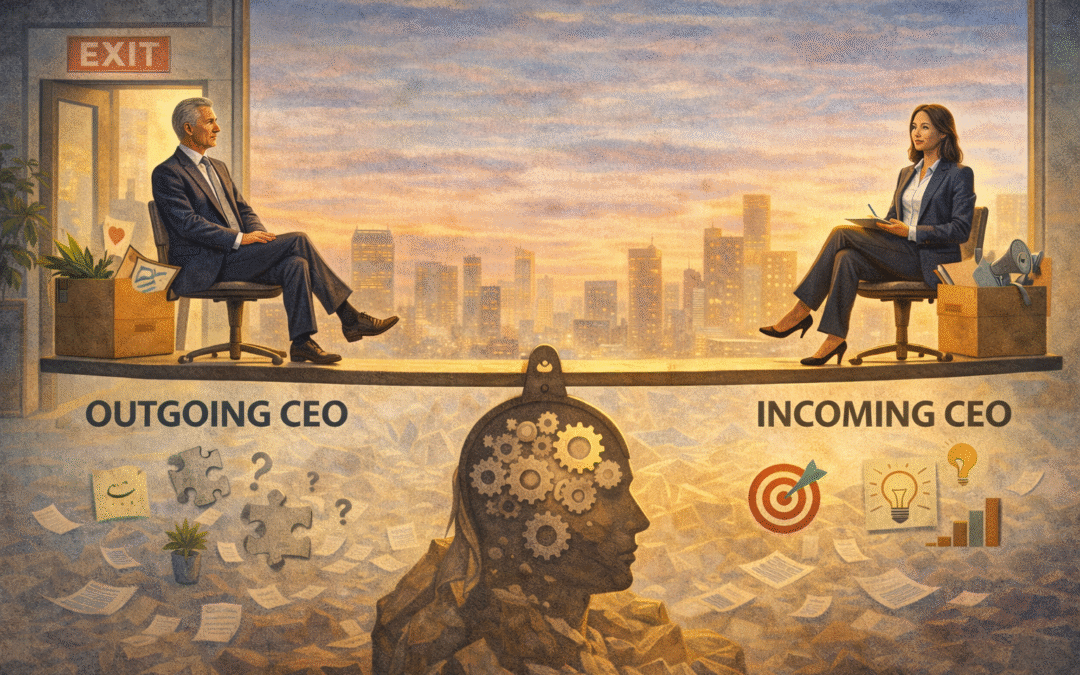
Leadership changes are often described in financial terms—market reactions, strategic pivots, or operational shifts. But beneath the headlines, there’s another impact that can be just as significant: culture. When a CEO, CFO, or other senior leader departs, the ripple effects touch how employees feel, how teams collaborate, and whether trust in the organization grows or fractures.
Why Culture Shifts During Transitions
Executives embody more than strategy—they embody values. A leader’s presence shapes how decisions are made, how conflict is resolved, and what behaviors get rewarded. When they leave, employees often wonder: Will our culture change? Will the new leader value what we value? Without a thoughtful approach, transitions can create uncertainty that undermines engagement.
A Client Story
We worked with a healthcare organization where the long‑time CEO retired after 20 years. The incoming leader was brilliant but came from a hard‑charging, numbers‑driven background. Within six months, employee engagement scores dropped. The issue wasn’t capability—it was cultural dissonance. We coached the new CEO to listen deeply in town halls, establish cultural anchors in strategy sessions, and retain some legacy rituals employees valued. Engagement rebounded, and the transition became a story of continuity plus renewal rather than rupture.
The Risks of Ignoring Culture
• Employee Uncertainty: Without clarity, rumors and fear fill the vacuum.
• Talent Flight: High performers may leave if they no longer feel aligned.
• Cultural Drift: The absence of intentional signals leads to fragmentation.
• Stakeholder Doubt: Investors and customers sense instability when culture erodes.
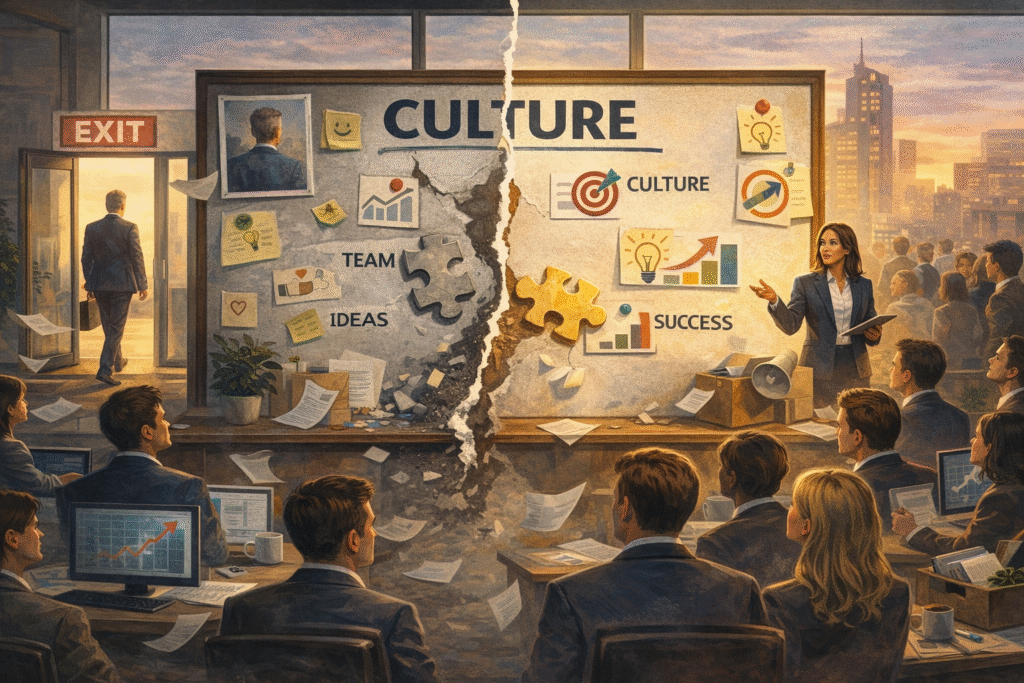
How to Manage Culture During Leadership Transitions
• Name the Transition: Acknowledge openly that leadership changes affect culture.
• Listen First: Encourage new leaders to hold listening tours and act on themes.
• Preserve What Works: Retain core rituals, values, and practices employees cherish.
• Signal New Energy: Introduce a few visible changes that reflect the incoming leader’s authentic style.
• Create Two‑Way Communication: Build forums where employees can ask questions and share concerns.
Leadership transitions don’t have to destabilize culture. With intention, they can strengthen it—honoring the past while shaping a future employees believe in. Culture is the silent driver of performance, and transitions are the moments when it needs the most care.
—
At TLESR, we guide organizations through leadership transitions with strategies that protect culture and sustain engagement.