
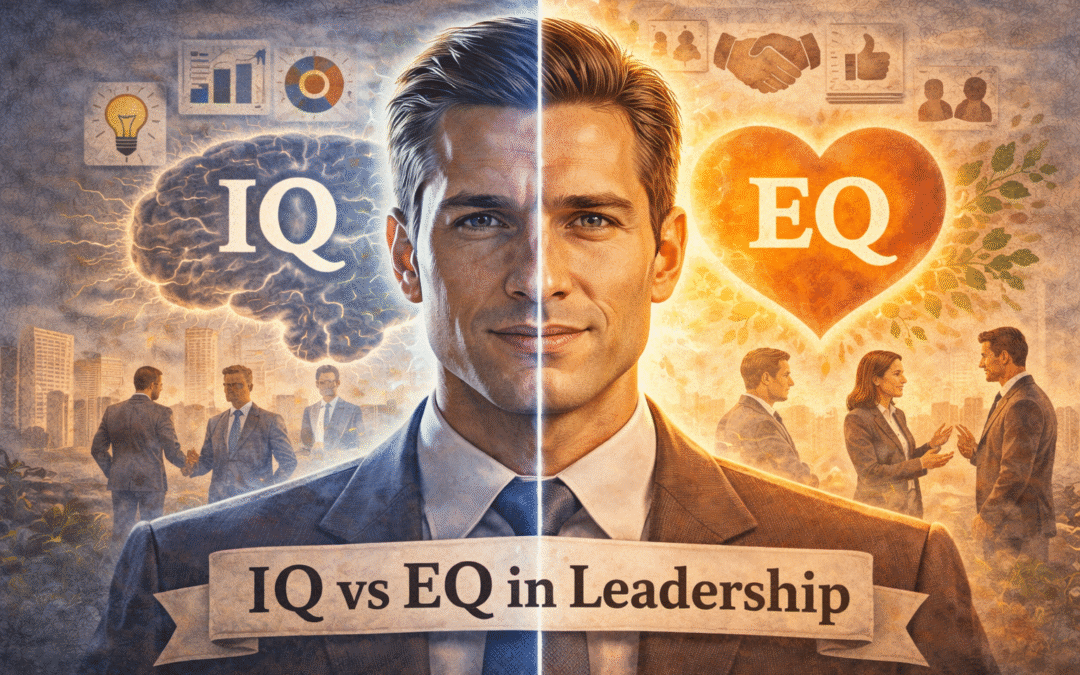
A global logistics company once shared with us a painful lesson: they had promoted a brilliant strategist to COO—someone with unmatched technical skills and industry knowledge. But within a year, the leadership team was fractured, turnover spiked, and engagement plummeted. The issue wasn’t competence—it was emotional intelligence. The new COO struggled to read the room, regulate frustration, and build trust. It was a reminder that in executive leadership, IQ may open the door, but EQ keeps you in the seat.
What Emotional Intelligence Really Is
Emotional intelligence (EQ) is the ability to understand and manage your own emotions, and to recognize and influence the emotions of others. For executives, it shows up in how they handle pressure, how they communicate, and how they inspire people in moments of uncertainty.
Why EQ Matters in Executive Leadership
• Decision‑Making Under Stress: Leaders with high EQ stay calm, listen actively, and make balanced choices.
• Team Engagement: Executives who show empathy build stronger trust, loyalty, and performance.
• Conflict Resolution: EQ helps leaders navigate disagreements without eroding relationships.
• Culture Building: Leaders model behaviors that set the tone for the entire organization.
A Client Story
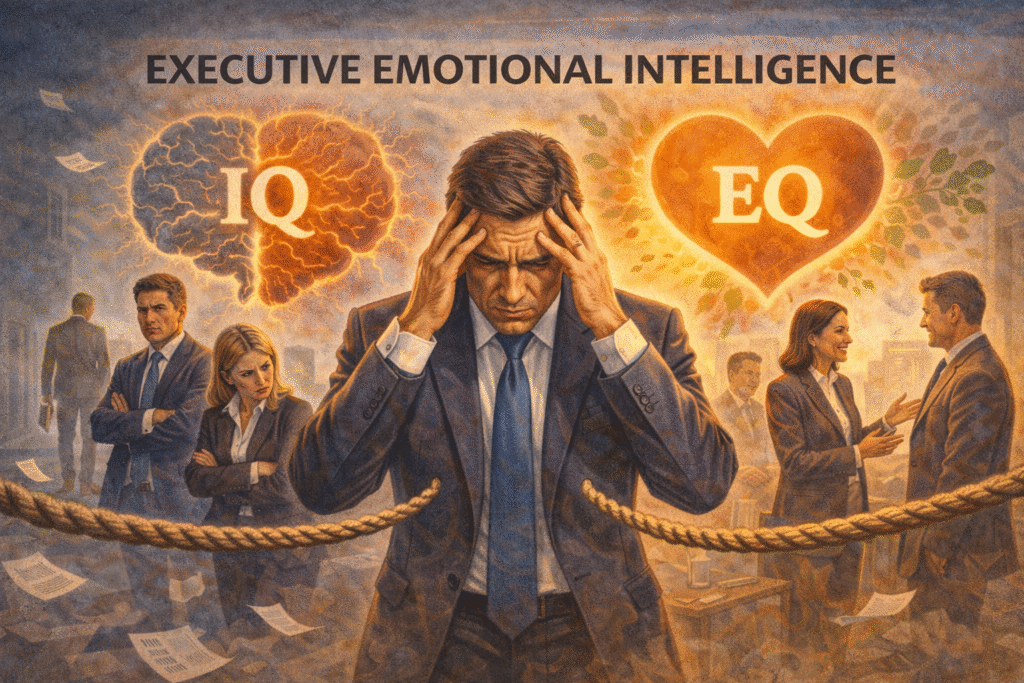
We worked with a private equity‑backed portfolio company where the CEO was brilliant but abrasive. In investor meetings, he was persuasive; with his team, he was dismissive. Turnover at the VP level became a crisis. Through executive coaching focused on emotional intelligence, he learned to pause before reacting, invite perspectives, and acknowledge contributions. Within six months, the leadership team stabilized, and performance improved—not because his strategy changed, but because his relationships did.
How to Develop EQ in Leaders
• 360 Feedback: Gather candid insights from peers, direct reports, and boards.
• Coaching: Provide executives with safe, confidential spaces to practice new behaviors.
• Self‑Reflection: Encourage leaders to journal, pause, and analyze emotional triggers.
• Empathy Training: Role‑play scenarios that develop perspective‑taking.
• Modeling: Pair leaders with mentors who exemplify strong EQ.
Signs a Leader Needs to Strengthen EQ
• Brilliant in strategy meetings but loses people in one‑on‑ones.
• Struggles to handle setbacks without blame.
• Creates silos by dismissing ideas that aren’t their own.
• High turnover or disengagement in their team despite strong business results.
Conclusion
Emotional intelligence is not a ‘nice to have’—it’s a core leadership capability. The executives who thrive in today’s complex environment are those who can balance intellect with empathy, and strategy with humanity. EQ is the invisible advantage that transforms smart leaders into great ones.
—
At TLESR, we integrate emotional intelligence assessments and coaching into our executive search process to ensure leaders aren’t just qualified, but truly effective.