
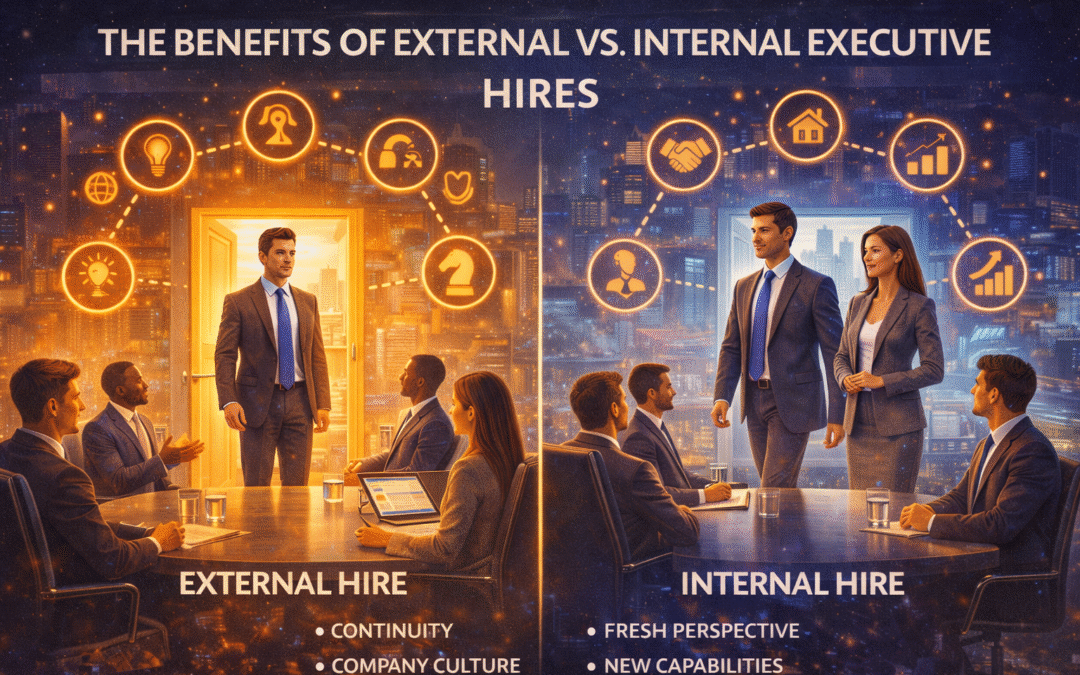
When a critical executive seat opens up, boards and CEOs face a familiar dilemma: promote from within or look outside? Each path carries benefits and risks. Internal hires bring continuity and cultural familiarity, while external hires inject fresh perspectives and new capabilities. The right choice depends on strategy, context, and timing.
The Case for Internal Hires

Internal promotions often create smoother transitions. These leaders know the culture, understand the business, and already have relationships that make them effective faster. They also boost morale—employees see visible proof that hard work and loyalty are rewarded.
The Case for External Hires

External executives bring something equally valuable: fresh perspective. They challenge assumptions, spot blind spots, and often bring playbooks from different industries or markets. For organizations facing disruption or transformation, external hires can accelerate change.
A Client Story
A global consumer goods company debated whether to promote its long‑time VP of Operations to COO or bring in external talent. The internal candidate was steady and respected, but the company was about to undergo a major digital transformation. We helped them weigh the options and ultimately recruit an external leader with deep digital expertise. To balance continuity, they paired the new COO with the internal VP in a deputy role. The combination gave the company the innovation it needed while preserving stability.
Factors to Consider
• Strategic Context: Is the business in a phase of continuity or transformation?
• Talent Bench: Do internal leaders have the skills and readiness to step up?
• Cultural Implications: Will an external hire disrupt or enhance the existing culture?
• Stakeholder Confidence: How will employees, investors, and customers perceive the choice?
Blending the Two Approaches
The best strategies often combine internal and external approaches. Companies can promote internally while bringing in external talent for complementary roles, or recruit externally while investing in succession planning for future internal moves. This balance reduces risk and builds resilience.
Conclusion
The decision between internal and external executive hires isn’t binary—it’s contextual. Organizations that weigh strategy, culture, and timing carefully can make choices that strengthen leadership and support long‑term growth.
—
At TLESR, we help boards and CEOs evaluate when to promote from within and when to look outside to secure the right leaders for their future.