
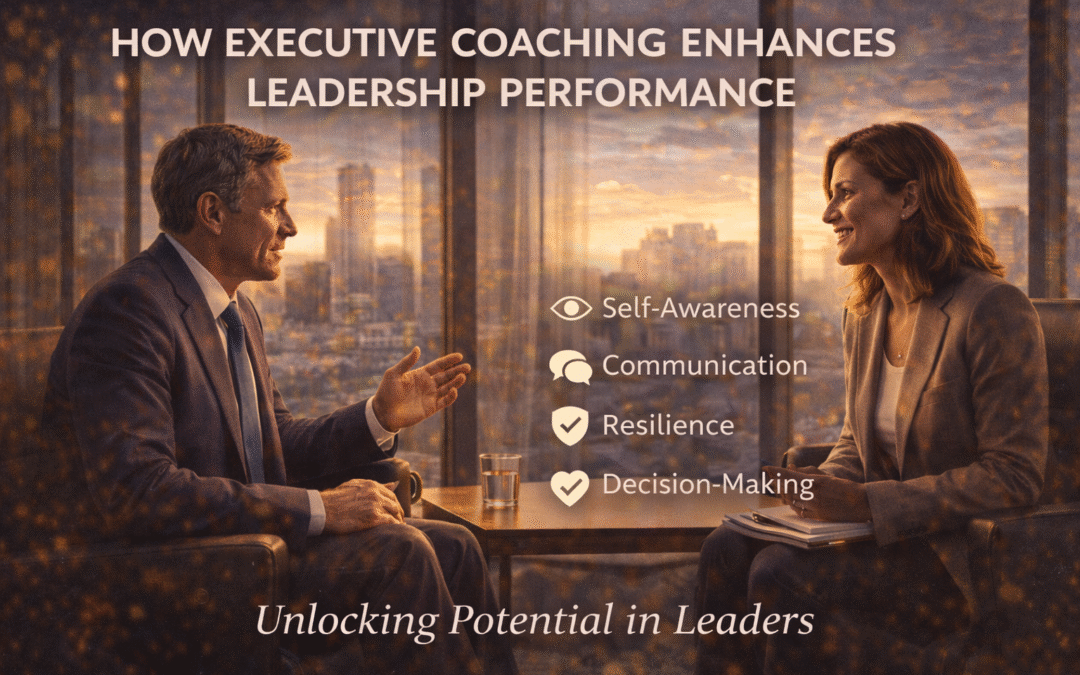
Even the most accomplished executives have blind spots. They may excel in strategy but struggle with communication, or inspire teams but falter under pressure. Executive coaching bridges these gaps, offering leaders a confidential space to grow, reflect, and sharpen their impact. In today’s demanding business environment, coaching is no longer a luxury—it’s a critical tool for sustained performance.
Why Coaching Matters for Executives
Executives face unique challenges: isolation at the top, relentless scrutiny, and the pressure to deliver results in uncertain markets. Unlike training programs, coaching is personalized. It meets leaders where they are, helping them navigate real‑time challenges while developing lasting skills.

A Client Story
We worked with a technology CEO whose technical brilliance was unquestioned, but his communication style was creating friction with the board. Through coaching, he developed stronger listening skills, learned to frame his ideas more persuasively, and built trust with stakeholders. Within a year, board relations improved significantly, and his team described him as both more approachable and more effective.
Key Benefits of Executive Coaching
• Self‑Awareness: Helps leaders recognize blind spots and strengths.
• Communication: Enhances clarity, empathy, and influence.
• Resilience: Builds capacity to handle stress and uncertainty.
• Decision‑Making: Improves judgment by testing assumptions and broadening perspectives.
• Team Impact: Stronger leaders create stronger teams, boosting engagement and performance.
When to Invest in Coaching
• During onboarding of new executives.
• In times of organizational transformation or crisis.
• When preparing high‑potentials for succession.
• To address specific leadership challenges (e.g., communication, conflict, resilience).
• As part of ongoing leadership development programs.
Conclusion
Executive coaching isn’t about fixing weaknesses—it’s about unlocking potential. Leaders who embrace coaching become more self‑aware, adaptive, and inspiring. Organizations that invest in coaching see stronger leadership pipelines, higher retention, and better business results.
—
At TLESR, we connect executives with experienced coaches who bring out their best and help organizations thrive.
Boardroom Questions Checklist
• Do we provide coaching support for newly appointed executives?
• How do we measure the ROI of coaching in terms of performance and retention?
• Are we using coaching reactively (to solve problems) or proactively (to build strengths)?
• Do we offer coaching across diverse leadership levels to build depth in our pipeline?
• How often does our board discuss leadership development as part of strategic planning?