
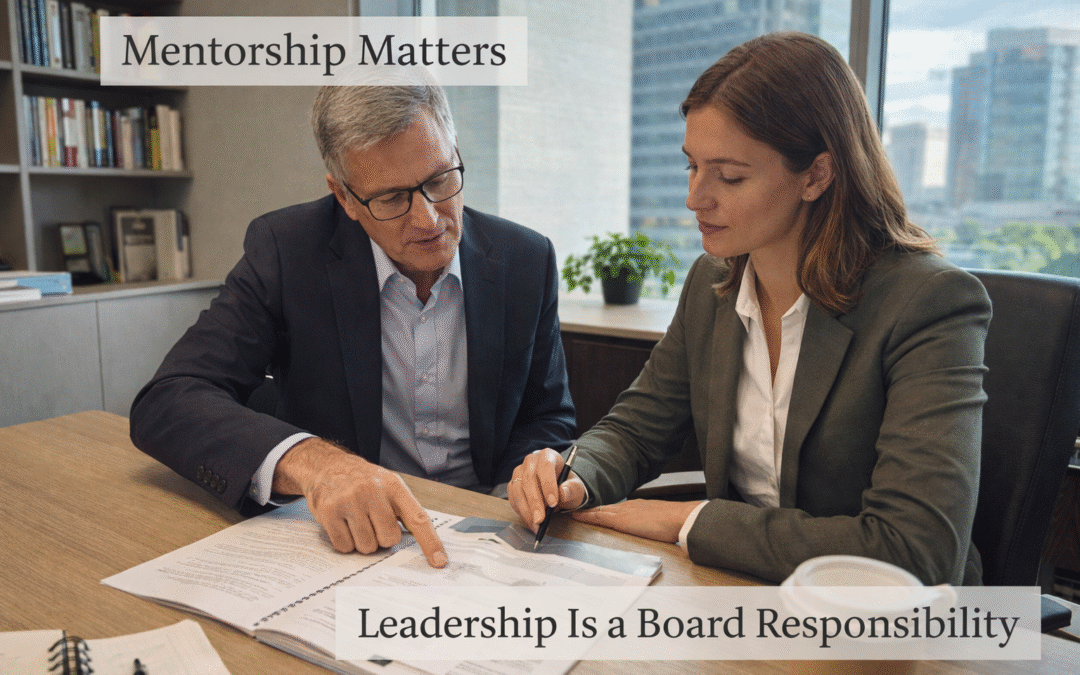
Too often, boards focus on quarterly numbers and governance checklists while overlooking one of their greatest responsibilities: leadership development. Without a strong pipeline of capable leaders, even the best strategies falter. Boards that prioritize leadership development future‑proof their organizations and signal to stakeholders that they are serious about long‑term success.
Why Leadership Development Belongs on the Board Agenda
Leadership capability is a strategic asset. It drives culture, execution, and adaptability. Boards that treat leadership development as a core agenda item—not an HR afterthought—create organizations that can weather disruption and thrive in uncertainty.
A Client Story
We advised the board of a mid‑sized tech company that had ambitious growth plans but kept losing senior leaders within 18 months of promotion. When we audited their approach, we discovered no structured leadership development program existed. Executives were promoted based on performance alone, without support for new challenges. The board approved a development initiative that combined coaching, mentorship, and stretch assignments. Within three years, leadership stability improved dramatically, and the company successfully scaled into new markets.
How Boards Can Champion Leadership Development
• Set Expectations: Make leadership development a standing item on board agendas.
• Review Pipelines: Ask management for regular updates on succession readiness.
• Support Resources: Ensure budgets for coaching, assessments, and development programs are in place.
• Hold Leaders Accountable: Tie CEO performance reviews to progress in building leadership depth.
• Model the Priority: Boards that ask tough questions about leadership signal its importance.
The Strategic Benefits
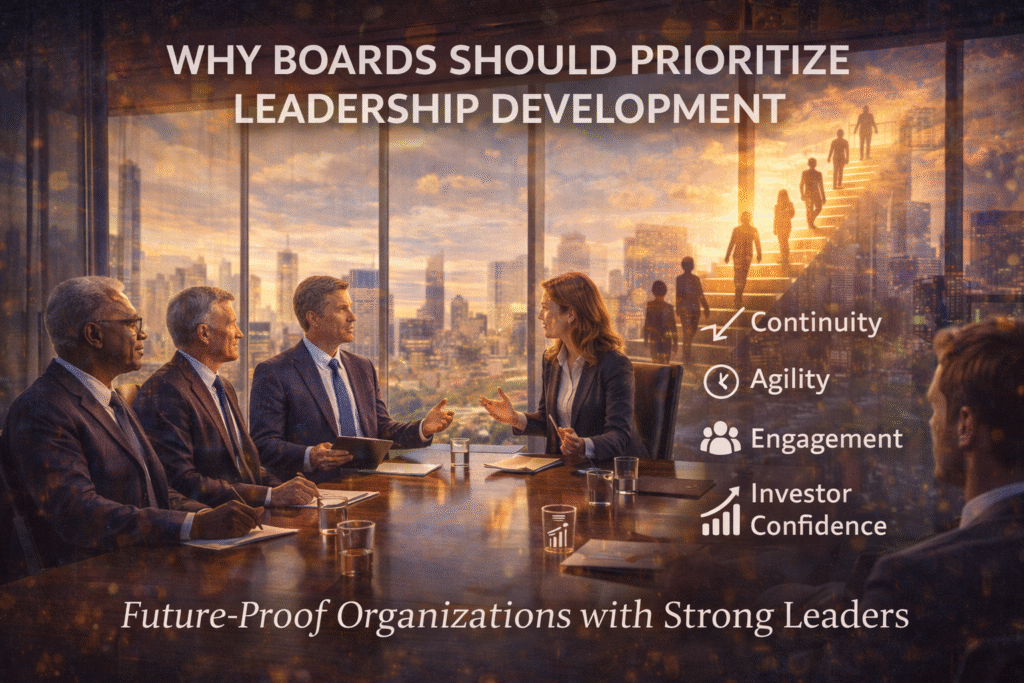
• Continuity: Smooth leadership transitions protect culture and performance.
• Agility: Leaders with broader skills adapt faster to market shifts.
• Engagement: Employees are more motivated when they see visible investment in leadership growth.
• Investor Confidence: Demonstrates foresight and reduces risk in governance.
Overcoming Common Barriers
• Short‑Term Focus: Boards focused only on immediate results can neglect the future.
• Lack of Metrics: Leadership development is harder to measure than financial KPIs—boards need clear indicators.
• Cultural Resistance: Some executives see development as remedial rather than strategic.
• Budget Constraints: Cutting leadership programs may save costs short‑term but increases long‑term risk.
Conclusion
Boards play a crucial role in ensuring leadership development is not optional but essential. By making it a governance priority, boards protect the company’s future, inspire investor confidence, and ensure the next generation of leaders is ready to take the helm.
—
At TLESR, we partner with boards to design leadership development strategies that align with long‑term organizational goals.