

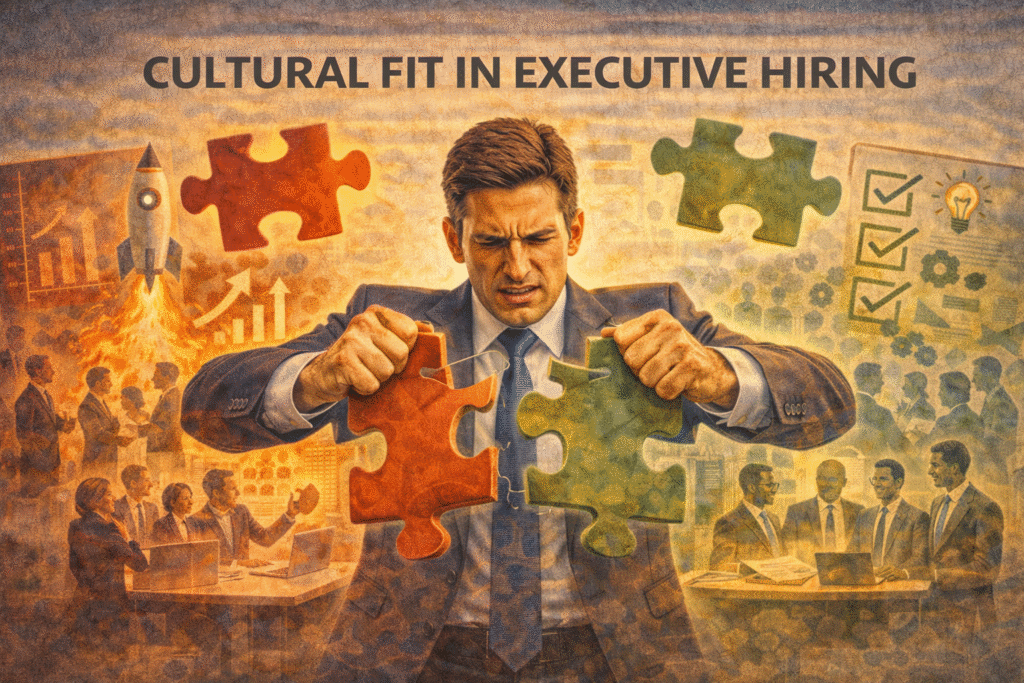
A global retail brand once hired a star Chief Marketing Officer from a leading competitor. On paper, the fit was perfect: impeccable track record, deep industry knowledge, and strong relationships. But within a year, the hire had left. The problem wasn’t capability—it was cultural misalignment. The executive thrived in a fast‑paced, risk‑taking environment, while the new company valued measured decisions and collaboration. The mismatch cost millions and left teams reeling. This is why cultural fit matters as much as technical skill in executive hiring.
What Cultural Fit Really Means
Cultural fit isn’t about hiring people who ‘look like us’ or reinforcing sameness. It’s about alignment between a leader’s values, style, and approach, and the company’s way of operating. Leaders who align with culture amplify it. Leaders who clash with it, even if talented, can destabilize it.
Why Cultural Fit is Critical at the Executive Level
• Leadership Impact: Executives don’t just join a culture—they shape it. Their style influences thousands of employees.
• Strategic Execution: A leader who shares the company’s values is more likely to execute strategy effectively.
• Engagement and Retention: Employees stay longer when they see executives embodying shared values.
• Stakeholder Confidence: Boards, investors, and customers all respond to cultural alignment at the top.
A Client Story
One of our clients in financial services had repeated challenges retaining Chief Risk Officers. Each hire was technically brilliant but failed to connect with a culture that prized transparency and collaboration. We introduced leadership assessments focused on values, decision‑making style, and team dynamics. The next hire not only fit culturally but thrived—reducing turnover and stabilizing risk management.
How to Assess for Cultural Fit in Executive Hiring
• Define Your Culture Clearly: Go beyond posters on the wall. What behaviors are rewarded? What stories are told?
• Use Behavioral Interviewing: Ask candidates for examples of how they’ve led in environments similar to yours.
• Incorporate Assessments: Tools that measure leadership style and values help reduce bias.
• Involve Multiple Stakeholders: Different perspectives ensure you’re seeing the full picture.
• Test with Real Scenarios: Present candidates with challenges they’ll face in your culture and watch how they respond.
Balancing Cultural Fit and Diversity
Cultural fit shouldn’t mean cultural sameness. The goal is alignment with values, not cloning personalities. Balance is key: embrace diversity of background and thought while ensuring leaders align with the company’s non‑negotiables.
Conclusion
In executive hiring, cultural fit is the difference between a leader who thrives and one who leaves. When executives align with your values and ways of working, they amplify strategy, inspire employees, and strengthen the organization’s identity.
—
At TLESR, we help organizations evaluate cultural fit alongside capability to ensure leaders don’t just succeed on paper, but in practice.